


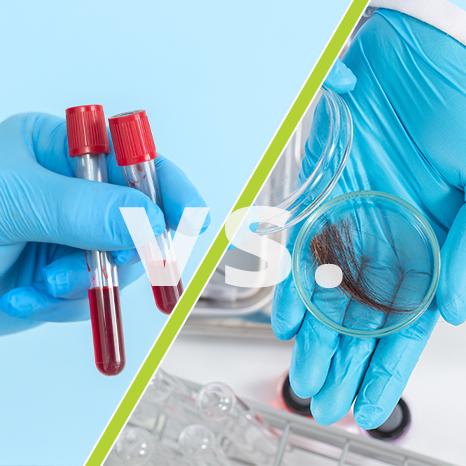
HTMA evaluates long-term metabolic patterns (6–8 weeks), Blood evaluates the short-term physiological state (minutes–hours).
What blood shows that HTMA does not:
- Chronic mineral deficiencies.
- Stress patterns (Na/K).
- Metabolic rate (Ca/P).
- Balance of the nervous system and electrolytes.
- Exposure to heavy metals.
What do blood tests measure that HTMA does not show?
- Real-time hormone levels.
- Inflammatory markers (CRP).
- Liver parameters (ALT, AST).
- Glucose/Insulin/HOMA-IR.
- Vitamin B12, D3, ferritin.
When should you choose HTMA?
- chronic fatigue
- neurological disturbances
- suspected chronic stress
- electrolyte imbalances
- detoxification
- problems with metabolic energy
When should you choose blood tests?
- inflammatory conditions
- thyroid assessment
- glucose metabolism
- evaluation of anemia
- liver function
- monitoring B12/D3 supplementation
Why is it best to use both?
Because together they provide a complete picture:
| Area | HTMA | Blood |
|---|---|---|
| Metabolism | ✓ | – |
| Chronic stress | ✓ | – |
| Electrolytes | ✓ | partially |
| Toxins | ✓ | – |
| Acute conditions | – | ✓ |
| Hormones | – | ✓ |
| Inflammation | – | ✓ |
Key Takeaways
- HTMA = long-term metabolism
- Blood = current status
- Together = comprehensive functional diagnostics
Does hair analysis (HTMA) replace blood tests?
No. HTMA shows long-term trends, while blood reflects the current state. Both tests complement each other.
Why can HTMA and blood results differ?
Blood is tightly regulated by homeostasis, whereas hair reflects changes accumulated over weeks. Therefore, they represent different time windows.
When is HTMA preferable and when are blood tests better?
HTMA — when you want to assess metabolism, stress, mineral ratios, and heavy metals.
Blood — when clinical diagnostics or evaluation of current parameters is required.
Is HTMA reliable for assessing long-term changes?
Yes — publications in environmental toxicology and population studies confirm that hair reliably reflects exposure and long-term mineral trends.
References:
- Gibson, R. S. (2005). Principles of Nutritional Assessment. Oxford University Press. The role of trace elements in metabolism, hormonal regulation, and glucose homeostasis.
- Mullaney, D., et al. (2013). Hair mineral analysis: An effective tool for assessing long-term mineral status. Journal of Orthomolecular Medicine; Support for HTMA as a long-term assessment tool.
- Park, S. et al. (2016). Analysis of trace elements in scalp hair as indicators of nutrition and health status. Annals of Occupational and Environmental Medicine.
- Bergdahl, I. A. (2005). Methods for biological monitoring of exposure to metals. Scandinavian Journal of Work, Environment & Health; Comparison of blood, urine, and hair as exposure biomarkers.
Die Haarmineralanalyse (HTMA) ist ein funktionelles und beobachtendes Instrument. Sie ersetzt weder die medizinische Diagnostik noch die ärztliche Beratung.